This is usually a cosmetic complaint, but it is not a small one. Once residue starts to collect, it changes how the room looks and how often the wall gets wiped. It also uses one outlet, which matters in tight rooms where a lamp, charger, or nightlight already needs that space. The fragrance may be the reason to buy the device, but the wall condition is what decides whether it stays welcome.
What the complaint looks like
The reports cluster around a few patterns. The wording changes, but the problem is familiar.
| Symptom | What it usually means | Why it bothers people |
|---|---|---|
| Oily ring on the wall plate | Scented material is settling near the outlet face | It makes a clean wall look smudged |
| Dust stuck to a faint film | The residue is grabbing airborne dust | The mark grows more visible over time |
| Discoloration near paint or trim | Heat and buildup have been sitting in one place | It reads like neglect, even in a tidy room |
| Drips after a refill change | The refill was not seated cleanly or was handled roughly | It creates a mess that starts right at the socket |
| One receptacle no longer available | The device occupies outlet space | The room loses flexibility for other devices |
The trouble is not limited to one style of fragrance. The note name matters far less than the setup around it. A strong output setting, a wall that sits too close to the unit, or a spot that catches dust will make the residue more obvious no matter what scent is inside.
Why plug-ins leave a mark
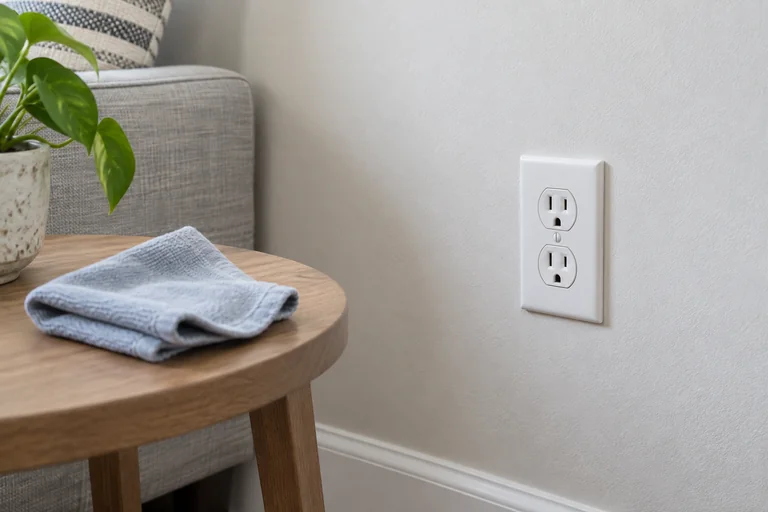
A plug-in works by warming scented liquid or a cartridge so fragrance can move into the air. The wall plate is the nearest cool surface, so some of that material can settle there instead of drifting through the room. Once a light film forms, dust sticks to it and the mark becomes easier to see.
Output level matters. Higher output can make the room smell fuller, but it also raises the chance of buildup near the outlet. So does placement. A unit pushed into a tight corner, placed under another heat source, or plugged into a wall with little clearance is more likely to leave a visible ring. Air movement can spread the scent through the room, but it can also spread fine residue and dust, which is why a room can smell fine while the outlet area starts to look grimy.
The wall surface matters too. Smooth, wipeable paint is easier to live with than wallpaper, textured plaster, or delicate trim. If the outlet sits in a bright hallway or next to a mirror, even a small film stands out. That is why this complaint feels more serious in visible spaces than it does in a laundry room or closet.
Who should think twice
This format is a poorer fit for anyone who cares about clean wall surfaces or has very limited outlet space.
- Renters who want to avoid marks on paint or trim
- Homes with fresh paint, wallpaper, or textured walls
- Small rooms where one outlet does double duty
- Hallways, entryways, and guest baths where the outlet is easy to see
- Bedrooms and offices with few free receptacles
- Anyone who does not want one more surface to wipe on a regular basis
If the outlet area is already part of the room’s visual line, the residue complaint becomes hard to ignore. A tiny halo around a wall plate can look minor in a back room and obvious in a front hall. The same product can feel easy in one space and irritating in another simply because the wall is more visible.
How to lower the risk before buying
You do not need to treat every plug-in as a wall-staining machine. Some habits reduce the chance of residue becoming a recurring problem.
- Favor units with adjustable output instead of a single strong setting.
- Prefer a closed, sealed refill system over an open reservoir.
- Choose a housing that leaves some space between the refill and the wall.
- Look for smooth surfaces that can be wiped clean without catching dust.
- Avoid units that seem designed to sit flush against painted trim or wallpaper.
- Keep the device away from direct vents, fans, or other heat sources.
- Put it in a room where losing one outlet will not create a new problem.
- Start at the lowest effective setting and only increase if the room needs it.
The practical idea is simple: the more the device asks from the wall, the more likely the wall is to show it. A lower setting, more clearance, and an easier-to-clean shape reduce the odds that the outlet area becomes the thing you notice first.
Better ways to scent a room if the wall matters
If a clean outlet plate matters more than hands-off convenience, other formats make life easier.
| Alternative | Why it helps | Trade-off | Best use |
|---|---|---|---|
| Room spray | No outlet contact and no wall film | Needs manual use each time | Bathrooms, rentals, guest-ready spaces |
| Reed diffuser | Stays on a shelf instead of a socket | Slower scent and a visible bottle | Entry tables, vanities, bedside surfaces |
| Sachet | No heat and no wall contact | Light scent and limited coverage | Closets, drawers, small enclosed spaces |
| Tabletop diffuser | Keeps fragrance away from the outlet area | Takes surface space and needs cleaning | Bedrooms, offices, larger rooms |
A room spray is the cleanest choice when fragrance is occasional and the wall must stay untouched. A reed diffuser is better when you want a steady accent without giving up an outlet. A sachet works when the goal is just to freshen a small enclosed space. A tabletop diffuser keeps the scent source away from the receptacle, which matters if the wall is part of the room’s look.
If you already own one
If residue has already started to show, the best move is to reduce the conditions that made it visible in the first place.
- Move the unit to a less visible outlet if one is available
- Turn the output down before increasing scent strength
- Wipe the wall plate and nearby paint before buildup hardens
- Keep the surrounding area free of dust, because dust makes the film easier to notice
- Do not layer several scent sources in the same small room
- Avoid placing the device where it sits directly in front of heat, sunlight, or airflow
- If the wall is delicate, retire the plug-in and switch to a format that stays off the wall
A small film is easier to live with when it appears in a back room or utility space. In a hallway or bath, the same film becomes a visual distraction. That is why placement often matters more than fragrance strength. The wall will tell you quickly whether the setup is working.
Final verdict
This is a format to use when you have a spare outlet, a wall surface that can be wiped now and then, and a room where the device will not be the main thing people see. It makes the most sense in laundry rooms, tucked-away bathrooms, closets, and other low-visibility spaces.
Skip it when the outlet sits on fresh paint, wallpaper, or a highly visible wall, or when you need that socket for something else. In those rooms, a room spray, reed diffuser, sachet, or tabletop diffuser keeps the fragrance away from the outlet area and avoids the cosmetic complaint that keeps showing up around plug-ins. The scent should freshen the room, not leave a ring behind.
See Also
If you want to move from general advice into actual product choices, start with Long-Lasting Perfume Complaints: Sticky Buildup in Humid Weather, Fragrance Hair Styling Cream: Complaints About White Residue on Hairline, and How to Choose a Fragrance for Your Skin Type.
For a wider picture after the basics, Classic Perfume vs Modern Perfume: Which One Fits Better? and Juliette Has a Gun Not a Perfume Review: Buy It or Sample First? are the next places to read.