Written by our fragrance desk editors, who track how light, heat, air, and decanting change perfume color, spray, and top-note brightness over time.

Storage spot Temperature stability Light exposure Humidity Best use Trade-off
Interior closet or drawer High Low Low to moderate Daily bottles and long-term keeping Needs a little organization and space
Original box inside a closet High Very low Low to moderate Slow-rotate bottles and backups Less visible, more “stored” than displayed
Bathroom cabinet Low Low when closed High Short convenience, not preservation Steam and temperature swings age perfume faster
Vanity near a window Low High Variable None for long-term storage Fastest path to faded top notes and darkened juice
Car or glovebox Very low High when parked in sun Low to variable Emergency only Heat spikes and repeated swings damage the formula

Temperature

Keep perfume in a room that stays near 60 to 70°F, and move it out of any space that spends time above 80°F. Heat pushes oxidation forward, speeds evaporation around the atomizer seal, and softens the bright opening that makes a fragrance feel alive.

A bottle on a dresser beside a radiator ages faster than the same bottle inside a drawer in an interior room. The damage is not dramatic at first. It starts as a flatter top note, then a weaker spray, then a bottle that smells tired before it should.

Best temperature rule of thumb

If the storage spot feels warm enough to notice through the bottle, it is too warm. We recommend an interior closet, a bedroom drawer, or a cabinet on an inside wall.

A cool basement sounds ideal, but damp coolness brings its own problem. Moist air attacks labels, metal caps, and collar finishes even when the juice stays intact. Temperature stability beats “cool” on its own.

What heat damages first

Citrus, herbal, and airy floral openings fade first. Dense amber, wood, and vanilla structures hold together longer, but hot storage still dulls them and darkens the liquid.

This is where many shoppers miss the real cost. Heat does not just age the scent, it ages the hardware. Sticky spray buttons, lifted labels, and loose crimps turn a pretty bottle into a maintenance problem long before the fragrance inside reaches its natural limit.

Light Exposure

Use darkness as the default. The original box is not packaging clutter, it is a light shield that buys the fragrance time.

Dark glass blocks some light, not all of it. A clear or pale bottle on a bright shelf takes the hit fastest, and even a shaded vanity near a window accumulates damage over time. We keep perfume in a drawer or back in the box when we know it will sit for weeks.

Box or drawer first

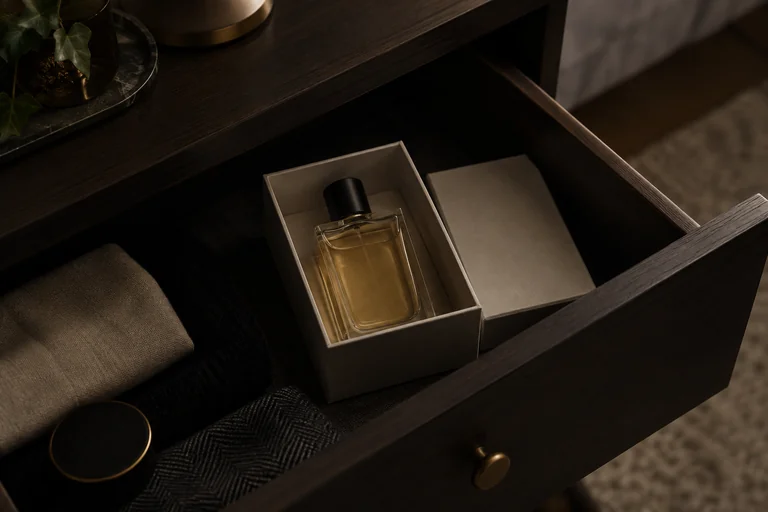
If a bottle is not in daily rotation, keep it in its box. If it is a daily bottle, a closed drawer or opaque cabinet works better than a decorative shelf.

The trade-off is simple. Display loses to preservation. A perfume on a shelf looks lovely for a while, but the most delicate top notes are the first thing light dulls.

Color change is not the same as spoilage

Most guides treat darkening as automatic failure. That is wrong. Many amber, vanilla, and resin-rich formulas darken as they age while still smelling correct.

We judge spoilage by smell first. If the juice turns darker but still opens with the same structure and drydown, the bottle is aging. If the opening turns sour, metallic, or solvent-like, the bottle has gone off.

Air and Bottle Handling

Keep the cap on and the bottle upright. Less air exchange means slower oxidation, and less movement means less wear on the seal.

Spray bottles last longer than splash bottles because the atomizer limits contact with fresh air. A splash bottle opened repeatedly pulls in oxygen every time the cap comes off, and the liquid at the neck ages faster than the rest of the bottle.

When decanting helps, and when it hurts

Decant only into a clean atomizer with a tight seal, and fill it nearly full for travel. A half-empty travel spray traps more air than most buyers expect, and a dirty funnel adds residue that changes the scent before age does.

The hidden trade-off is convenience. Decanting solves carry-on and purse use, but every transfer adds contamination risk. For a fragrance we wear often, a clean travel atomizer works. For a rare bottle, the original spray bottle is safer.

Keep the atomizer clean

Wipe the neck before recapping, and do not leave a bottle half-pressed on a vanity. That small gap invites evaporation and dust, and a dusty nozzle loses a clean spray pattern long before the perfume smells truly spoiled.

What Most Buyers Miss

Most guides recommend the refrigerator. That advice is wrong for daily-use perfume, because the bottle sees warm kitchen air every time it leaves the fridge and condensation forms on cold glass. Stability matters more than cold.

A stable dark drawer at room temperature protects perfume better than a busy fridge that opens all day. The fridge only makes sense for sealed bottles stored long term in a low-traffic space, not for a bottle we reach for every week.

Cold is not automatically safer

Cold slows chemistry, but repeated warm-cold cycling creates new problems. Every return to room temperature wakes up moisture, and moisture is rough on labels, collars, and spray mechanisms.

This is a practical detail that changes ownership cost. The fragrance may survive, but the presentation suffers first. Collectors who resell bottles notice that a clean label, dry crimp, and smooth sprayer protect value even before the juice itself turns.

What Changes Over Time

Perfume ages in layers. The opening fades first, the heart holds next, and the base stays longest.

That means a bottle can smell “off” in a specific way without being fully ruined. A citrus-floral that loses sparkle after months on a vanity is aging. A bottle that smells sour, metallic, or like nail-polish remover at the first spray is spoiled.

A fast smell test

Spray once on a blotter or clean skin and wait a minute. If the first 30 seconds smell solvent-heavy, sour, or sharp in the wrong way, the bottle has crossed the line.

If the opening is softer but the drydown still smells like the original fragrance, the bottle is still usable. We do not judge by color alone, and we do not judge by the label alone. Scent structure tells the real story.

What to expect by fragrance style

Bright citrus and sheer florals lose lift first. Woods, ambers, and vanillas hold their shape longer, but they still darken and flatten under poor storage.

That difference matters when we buy larger bottles. A dense winter fragrance tolerates slow rotation better than a sparkling summer scent. Oversized bottles of delicate juice spend more time aging on the shelf than being worn.

How It Fails

Spoilage shows up in three places: smell, appearance, and hardware.

  • Smell failure: sour, vinegary, metallic, or solvent-like opening
  • Appearance failure: cloudy liquid, unexpected sediment, or sudden murkiness
  • Hardware failure: weak mist, sticky atomizer, leaking collar, lifted label

A darker liquid does not always mean failure. Vanilla, amber, and oud-heavy formulas darken as they age. The red flags are odor change and structural breakdown, not color alone.

We also watch the secondhand market here. A sealed-looking bottle from a hot shelf or sunny display still carries storage damage, even if the box looks perfect. The outside of the package hides nothing about the heat history.

Who Should Skip This

Skip decorative storage if perfume lives in a bathroom, a car, or a bedroom shelf that gets sunlight. If the bottle sits in any of those places, preservation stops being a realistic goal.

People who want full-time display should buy smaller bottles and finish them faster. That choice keeps the juice in motion and shortens the time it spends aging in the wrong room.

Collectors of delicate citrus colognes and airy florals need stricter storage than buyers of dense ambers or woody scents. The more transparent the fragrance, the more it rewards a dark, dry home.

Final Buying Checklist

Before we put a bottle away, we check these basics:

  • Is the storage spot inside a room that stays near 60 to 70°F?
  • Does the space stay below 60% humidity?
  • Is the bottle upright and capped after every use?
  • Does it live in its original box when it is not in active rotation?
  • Is the bottle away from windows, radiators, vents, and appliances?
  • Will a smaller size finish before it sits untouched for a year?

If the last answer is no, we buy smaller. Oversized bottles look efficient on paper, but they expose more juice to slow aging.

For travel, we use a clean atomizer and fill only what we plan to wear soon. A travel spray solves portability, but it does not replace proper storage for the main bottle.

Common Mistakes to Avoid

  • Keeping perfume in the bathroom. Steam and temperature swings age the seal and the liquid faster than a dry closet.
  • Leaving bottles on a sunny shelf. Light breaks down delicate top notes and pushes color change.
  • Trusting dark glass alone. Dark glass blocks some light, not heat.
  • Using the fridge as the default home. Repeated condensation and temperature cycling work against daily-use bottles.
  • Leaving the cap off after testing. Open necks invite oxidation and dust.
  • Decanting into unwashed atomizers. Old residue changes the scent before the perfume itself expires.
  • Judging by color only. Darkening alone does not prove spoilage.
  • Treating the box like trash. The box is one of the simplest ways to block light.

Most buyers miss the biggest point here: storage is about consistency, not perfection. One warm afternoon does less damage than a year on a vanity with daily sunlight.

The Practical Answer

We keep perfume from going bad by giving it one stable home and not moving it around for convenience. The best home is a cool, dry, dark interior drawer or closet, with the bottle upright, capped, and back in its box when it is not in use.

If we want the shortest rule, we use this one: store perfume like something fragile and aromatic, not like a bathroom staple. Bathrooms, cars, windowsills, and hot shelves do the most damage. A smaller bottle beats a bottle that sits half-finished for years.

The goal is not to freeze perfume in time. The goal is to slow the changes so the fragrance wears as intended for as long as possible.

Frequently Asked Questions

Does unopened perfume go bad?

Yes. An unopened bottle still ages because heat and light break down the formula even when the spray has never been used. The original box and a cool, dark place slow that process the most.

Is the bathroom really that bad?

Yes. Bathrooms combine steam, heat swings, and humidity, and those conditions age both the scent and the bottle hardware. A drawer in a bedroom or closet gives perfume a much more stable home.

Should we store perfume in the fridge?

No for everyday bottles. A fridge adds condensation risk and temperature cycling every time the bottle comes out. A stable dark cabinet or drawer works better for daily use.

How do we know perfume has spoiled?

We smell it first. Sour, metallic, vinegar-like, or nail-polish-remover notes at the opening point to spoilage, and cloudy liquid or an unexpected sediment line strengthens that warning. Darkening alone does not prove the bottle is bad.

Does decanting help perfume last longer?

Only with care. A clean, airtight atomizer for travel helps when we refill it and use it quickly, but sloppy transfer work adds contamination and more air exposure. The original bottle remains the safest long-term container.

Is it safe to keep perfume on a dresser?

Only if the dresser sits in a cool, dark room away from sun and heat sources. A dresser near a window or radiator ages perfume faster than a closed drawer in the same room.

Why does the spray smell different after a while?

The top notes fade first. A perfume that smells flatter at the first spray but still reads correctly in the drydown is aging, not spoiled. If the opening turns harsh or sour, the bottle has gone off.

{
  "@context": "https://schema.org",
  "@type": "FAQPage",
  "mainEntity": [
    {
      "@type": "Question",
      "name": "Does unopened perfume go bad?",
      "acceptedAnswer": {
        "@type": "Answer",
        "text": "Yes. An unopened bottle still ages because heat and light break down the formula even when the spray has never been used. The original box and a cool, dark place slow that process the most."
      }
    },
    {
      "@type": "Question",
      "name": "Is the bathroom really that bad?",
      "acceptedAnswer": {
        "@type": "Answer",
        "text": "Yes. Bathrooms combine steam, heat swings, and humidity, and those conditions age both the scent and the bottle hardware. A drawer in a bedroom or closet gives perfume a much more stable home."
      }
    },
    {
      "@type": "Question",
      "name": "Should we store perfume in the fridge?",
      "acceptedAnswer": {
        "@type": "Answer",
        "text": "No for everyday bottles. A fridge adds condensation risk and temperature cycling every time the bottle comes out. A stable dark cabinet or drawer works better for daily use."
      }
    },
    {
      "@type": "Question",
      "name": "How do we know perfume has spoiled?",
      "acceptedAnswer": {
        "@type": "Answer",
        "text": "We smell it first. Sour, metallic, vinegar-like, or nail-polish-remover notes at the opening point to spoilage, and cloudy liquid or an unexpected sediment line strengthens that warning. Darkening alone does not prove the bottle is bad."
      }
    },
    {
      "@type": "Question",
      "name": "Does decanting help perfume last longer?",
      "acceptedAnswer": {
        "@type": "Answer",
        "text": "Only with care. A clean, airtight atomizer for travel helps when we refill it and use it quickly, but sloppy transfer work adds contamination and more air exposure. The original bottle remains the safest long-term container."
      }
    },
    {
      "@type": "Question",
      "name": "Is it safe to keep perfume on a dresser?",
      "acceptedAnswer": {
        "@type": "Answer",
        "text": "Only if the dresser sits in a cool, dark room away from sun and heat sources. A dresser near a window or radiator ages perfume faster than a closed drawer in the same room."
      }
    },
    {
      "@type": "Question",
      "name": "Why does the spray smell different after a while?",
      "acceptedAnswer": {
        "@type": "Answer",
        "text": "The top notes fade first. A perfume that smells flatter at the first spray but still reads correctly in the drydown is aging, not spoiled. If the opening turns harsh or sour, the bottle has gone off."
      }
    }
  ]
}