What to Prioritize First in a Perfume Inventory Tracker
The first thing to get right is bottle identity, then wear status. A list that stops at brand and scent name misses flankers, reformulations, partial fills, and backup bottles. That is the point where inventory turns into memory work, and memory work fails first.
Start with the fields that keep a bottle recognizable and useful:
- Brand and fragrance name
- Concentration, such as EDT, EDP, extrait, or parfum
- Bottle size
- Opened date
- Last worn date
- Storage location
- Full bottle, decant, sample, travel spray, or backup
- Occasion tag, such as office, date night, warm weather, or evening
Occasion fit belongs near the top because it changes rotation. A bright citrus worn for office hours does not sit in the same line as a dense amber saved for evenings, even if both live in the same scent family. The tracker works best when it mirrors how the collection gets used, not just how the bottles look on a shelf.
A simple rule keeps the list clean: one entry per physical container. If the same scent exists as a full bottle, a decant, and a travel spray, each one needs its own line. That prevents false confidence and keeps the count honest.
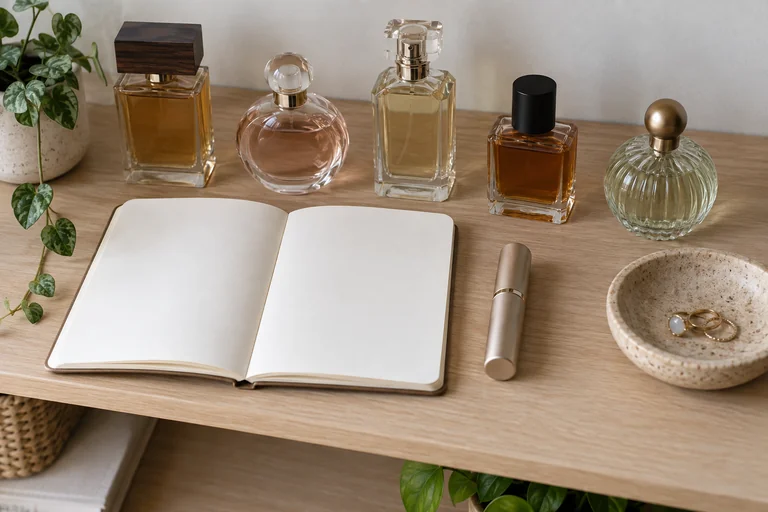
How to Compare Your Tracker Options
The comparison is not about luxury versus frugality. It is about how much structure the collection demands before duplicate buys, missing backups, and seasonal rotation start slipping through.
| Tracker format | Best fit | What it does well | Trade-off |
|---|---|---|---|
| Notes app | Small, stable collections | Fast entry, easy phone access, no setup burden | Weak sorting, weak duplicate control, hard to compare bottles side by side |
| Spreadsheet | Growing collections with backups, decants, or seasonal rotation | Filters, custom columns, sort by last worn date, simple duplicate checks | Needs more upkeep and a little discipline at entry |
| Database-style catalog | Complex inventories with multi-location storage, swaps, or resale notes | Stronger tagging, photo fields, linked records, and cleaner control over partial fills | More setup time and more friction when updating on the fly |
| Paper journal | Low-volume collections with a display-first routine | Tactile, visually calm, easy to browse by hand | Takes physical space, loses search speed, and turns edits into messy revisions |
The spreadsheet is the clean premium step up from a notes app. It changes the experience when filters, custom columns, and duplicate checks matter more than speed. The jump to a database-style catalog only pays off when the collection needs linked entries, batch notes, or more than one storage location.
A tracker without occasion and longevity tags treats a bright citrus that disappears by lunch the same way it treats a dense amber that stays plush into evening. That flattening is the hidden problem. The list looks neat while the wear pattern gets blurred.
What You Give Up Either Way
A simple tracker gives up detail. A detailed tracker gives up speed. That is the real choice, and every other feature sits underneath it.
Simple formats keep the habit alive. They open fast, stay easy to update, and work when the collection feels personal rather than logistical. They also miss the information that prevents regret, such as duplicate flankers, backups tucked in a drawer, and a forgotten bottle that belongs in spring rather than winter.
Detailed formats do the opposite. They tell the truth about what is owned, what is opened, what is waiting, and what gets worn. They demand a regular cleanup habit, and each extra field adds one more pause at the shelf. The hidden cost sits in attention, not in money.
The strongest reason to add structure is rotation. Once occasion fit matters, the tracker stops being a count and becomes a wearing plan. That matters when a soft, social floral gets reached for three times a week while a louder oud sits reserved for specific nights. The sheet should reflect that difference.
How to Check Perfume Inventory Tracker Checklist for Daily Use
The fastest way to judge the checklist is to test it against real collection patterns, not against an ideal shelf photo. A tracker that works on paper and fails in daily use is a decorative list.
| Collection pattern | Tracker depth | Fields that matter | Failure point if skipped |
|---|---|---|---|
| A few full bottles, no backups | Light | Name, size, location, last worn date | Duplicate buys and forgotten seasonal bottles |
| Seasonal rotation with office and evening wear | Medium | Occasion tag, season tag, opened date, last worn date | Everything gets treated like everyday wear |
| Samples, decants, and travel sprays | Detailed | Source bottle, size, remaining estimate, date decanted | Partial fills disappear into the pile |
| Swaps, resale, and archived bottles | Detailed | Condition, batch code, purchase source, storage location | Provenance gets lost and records stop helping |
A decant should not sit as an anonymous line next to its parent bottle. Link them if the format allows it, or label them clearly if it does not. That one habit keeps the collection from looking larger than it is.
The other pressure point is placement. If bottles live across a vanity, a drawer, and a travel bag, the tracker needs a location field. Without that, the list says a bottle exists while the room says otherwise.
What to Keep Up With
A perfume inventory tracker stays useful only when updates happen close to the bottle. Delay creates the same problem as a cluttered shelf, the information starts looking pretty but stops helping.
Use a simple rhythm:
- Add new bottles the day they arrive
- Mark the opened date on first use
- Update last worn date after a wear, not at the end of the season
- Move emptied samples and travel sprays to an archive line
- Reconcile backups, duplicates, and partial fills once a month
- Refresh occasion and season tags when weather turns
That monthly pass is the real maintenance cost. It is not financial. It is the time it takes to keep the list aligned with what sits on the shelf. Without it, the tracker turns into a wish list, and the collection starts buying repeats of bottles that already exist.
Seasonal reset matters more than most trackers admit. A winter-heavy lineup looks generous in January and overcrowded in July. The list needs to reflect that shift, or the front row stays crowded with bottles that no longer suit the week.
What to Verify Before Buying a Tracker Format
Before choosing a format, confirm the limits that matter for a perfume collection rather than a generic list.
Check for these points:
- Custom fields for occasion, season, and concentration
- Separate lines for decants, samples, travel sprays, and full bottles
- A way to mark backups and duplicates
- Search or filtering that works fast enough to use
- Export or backup options if the device changes
- Space for photos or notes if bottle labels and box codes matter
- Easy editing on the device used most often
A format that locks the list to one device creates fragility. A format without export turns one cleanup into a permanent risk. A format without custom fields falls apart the moment a collection includes decants, batch notes, or multi-size versions of the same scent.
Paper has one extra constraint worth naming: space. A journal takes room, and a dense list becomes hard to revise once the pages fill. That works for a slow-moving display collection. It fails for a collection that changes with the season.
Final Buying Checklist
Use this as the last pass before settling on a tracker format:
- Separates full bottles, decants, samples, and travel sprays
- Tracks opened date and last worn date
- Includes occasion and season tags
- Logs storage location
- Flags backups and duplicates
- Supports export or reliable backup
- Stays quick enough to update after each wear
If two or more of these fail, choose a simpler format or a more structured one. A tracker that looks complete but takes too long to maintain loses its value fast.
The best checklist is the one that stays open long enough to prevent regret. That means enough structure to capture the collection honestly, but not so much structure that updates get skipped.
The Practical Answer
For a small, stable collection: keep it simple with a notes app or paper journal. The priority is ease, not data depth.
For a growing rotation with backups and decants: use a spreadsheet. Filters, custom columns, and sort order change the experience in a real way.
For a collector-level inventory with swaps, resale notes, or multiple storage spots: move to a more structured catalog. The extra setup earns its place when duplicates, provenance, and location matter more than quick entry.
The upgrade is worth paying attention to only when it changes the wearing experience, not just the recordkeeping. If the tracker helps the right bottle get worn at the right time, it is doing its job.
Frequently Asked Questions
What fields belong in a perfume inventory tracker checklist?
At minimum, include brand, fragrance name, concentration, bottle size, opened date, last worn date, storage location, and a status tag for full bottle, decant, sample, travel spray, or backup. Occasion and season tags add real value once the collection starts rotating.
Should decants and backups get their own entries?
Yes. A decant and an unopened backup are different physical items with different roles. Separate entries prevent the inventory from overstating what is actually ready to wear.
Is occasion tagging worth the extra work?
Yes. Occasion tagging keeps the tracker tied to wearability instead of sentiment. An office-safe floral and a late-evening amber do not belong in the same rotation lane, even if both are favorites.
Is a spreadsheet better than a notes app?
Yes, once the collection needs filters, duplicate checks, and more than a simple count. A notes app works for a small, stable list. A spreadsheet earns its place when bottles, samples, and backups start competing for attention.
How often should the tracker be updated?
Update it when a bottle arrives, opens, moves, gets worn, or empties, then do one monthly reconciliation. That rhythm keeps the list aligned with the shelf and stops forgotten bottles from turning into repeat purchases.
See Also
If you want to move from general advice into actual product choices, start with Desk Fragrance for Focus: Evidence and Product Checks, Perfume Test-Strip Sampling Planner, and How to Choose a Purse Size Perfume.
For a wider picture after the basics, Best Sweet Perfumes: Top Fragrances for a Delicious Scent and Juliette Has a Gun Not a Perfume Review: Buy It or Sample First? are the next places to read.